
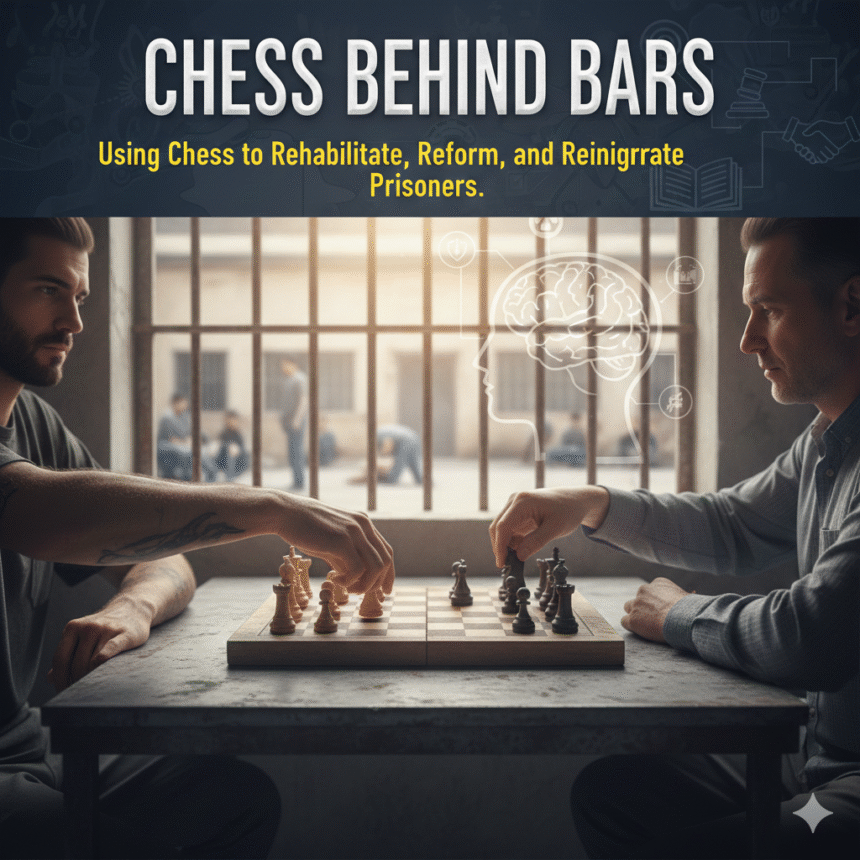
Imagine a prison cell where instead of anger and hopelessness, you hear the gentle click of chess pieces. Picture inmates sitting across from each other, deeply focused, planning their next move. This isn’t just a game—it’s a path to transformation.
The Problem: Prisons Without Purpose
When people go to prison, they often lose hope. Many spend years doing nothing productive. Without proper programs, research shows that a significant portion of released prisoners return to crime. In the United States, approximately 44% of released criminals return to prison within the first year, and studies show that within five years, about 70% are rearrested.
Prisons worldwide face similar challenges. Inmates fight, form gangs, and often learn worse behaviors from each other. When they leave prison, society rejects them. They struggle to find jobs. Families turn away. The cycle continues.
The Solution: 64 Squares of Hope
Chess offers something remarkable: a way to rebuild broken minds and lives through critical thinking, patience, and self-control.
How Chess Changes Prisoners
Teaching Patience and Planning
In chess, rushing leads to losing. Prisoners learn to think before acting—a skill many never developed. Every move requires considering consequences, just like decisions in life. This fundamental shift from impulsive reactions to thoughtful planning can transform behavior patterns.
Building Self-Control
When your opponent captures your queen, you cannot flip the board or start a fight. You must stay calm, analyze the position, and find a solution. This emotional regulation practice transfers directly to real-life situations where anger management becomes crucial.
Creating Respect Without Violence
In prison, respect traditionally comes from physical dominance or intimidation. Chess creates a different hierarchy—one based on intelligence and skill. A quiet, physically small person can defeat the biggest, strongest inmate on the chessboard. This completely reframes how respect is earned and maintained.
Real Success: Cook County Jail’s Chess Program
The most documented prison chess program operates at Cook County Jail in Chicago, one of America’s largest jail facilities.
The Beginning
In 2012, Sheriff Tom Dart launched the program after watching his son thrive in chess classes taught by Dr. Mikhail Korenman, a passionate chess educator. Dart approached Korenman with a simple question: “Do you not want them a little better than they were?” Korenman agreed to try it for one semester. Thirteen years later, that semester continues.
How It Works
The program started with basic chess instruction and quickly expanded. Inmates must demonstrate good behavior to participate. They attend weekly classes, learning not just the moves but the deeper lessons chess teaches—critical thinking, patience, impulse control, and positive social interaction.
Going Global
What started in Chicago became a worldwide movement. Cook County’s chess program partnered with FIDE (International Chess Federation) to create “Chess for Freedom,” a global initiative that has spread to 57 countries across six continents.
Inmates now compete in international online tournaments. The 5th FIDE Intercontinental Online Chess Championship for Prisoners in 2025 featured 135 teams from countries including the United States, Russia, Italy, Ghana, Malawi, Kazakhstan, Singapore, and many others. Prisoners who never touched a chess piece before incarceration now represent their countries in international competition.
Why Chess Works
Unlike sports requiring expensive equipment or large spaces, chess needs only a board and pieces. One set can serve countless games. It works in small cells or large halls. Players can be any age, size, or physical ability.
Chess builds transferable skills that help after release:
Problem-Solving: Breaking down complex situations into manageable steps—essential for employment and daily challenges.
Critical Thinking: Analyzing options and consequences before making decisions—crucial for avoiding crime.
Social Interaction: Engaging with others in a structured, positive, and non-violent way.
Achievement and Identity: Building self-worth through genuine accomplishment rather than criminal status.
The Reintegration Challenge
The real test comes after release. Former prisoners who continue playing chess have opportunities others don’t. They can join chess clubs, attend tournaments, and meet people who judge them by their chess skill, not their criminal record.
One Cook County program called “Checkmates for Kids” allows incarcerated fathers to play chess virtually with their children via video call, maintaining crucial family connections that support successful reintegration.
Evidence from Other Rehabilitation Programs
While specific data on chess programs’ impact on recidivism is still being collected, research on similar educational and skill-building prison programs offers insights.
Studies consistently show that harsh prison conditions increase reoffending rates, while programs that develop cognitive skills, provide education, and prepare inmates for reentry reduce recidivism. Countries with rehabilitation-focused prisons, like Norway with its 20% five-year recidivism rate, vastly outperform punishment-focused systems.
The principle is simple: punishment alone doesn’t change behavior. Teaching new ways of thinking does.
Learning from Reading Programs
Brazil’s prison system offers a parallel example. Since 2012, prisoners can reduce their sentences by reading books and writing reviews—four days off per book, maximum 48 days annually.
Remarkably, Brazilian prisoners now read nine times more books than the national average. The program doesn’t just reduce sentences; it transforms how inmates think, expanding their worldview and giving them analytical skills for life after prison.
If reading alone can achieve this, imagine what chess—which combines reading comprehension with strategic thinking and social interaction—can accomplish.
The Bigger Picture
Chess doesn’t erase crimes or remove consequences. But it plants seeds of change. It demonstrates that your past doesn’t define your future—your next move does.
Dr. Korenman, who has worked with Cook County inmates for over a decade, emphasizes the program’s deeper purpose: “You play the game of chess, you must learn to think not just for yourself but for two people, to anticipate what they will do.”
This skill—understanding another person’s perspective and planning accordingly—is transformative for people whose criminal behavior often stemmed from inability to consider consequences or empathize with victims.
What Makes It Work
The success of prison chess programs comes from several factors:
Accessibility: Anyone can learn regardless of education level Dignity: Players earn respect through skill, not violence Community: Connection to a global chess culture that welcomes all players Hope: Tangible progress and achievement in an environment designed to strip both away
When FIDE President Arkady Dvorkovich visited Cook County Jail, he called the program “outstanding” and urged its promotion everywhere. Representatives from dozens of countries now visit to learn how to implement similar programs.
Moving Forward
Prison chess programs represent a simple but profound truth: people can change when given the right tools. The chessboard becomes a mirror where inmates see themselves thinking differently, choosing differently, and ultimately being different.
As these programs expand globally, they challenge our assumptions about punishment, rehabilitation, and human potential. They ask a fundamental question: Do we want prisons that simply punish, or prisons that transform?
The answer is being played out, one move at a time, in jails and prisons across countries and counting.
The board is set. The pieces are ready. The next move belongs to us.
ChessSL believes in chess’s power to transform lives—in schools, communities, and wherever people need hope, structure, and a path forward.